Are You Destroying Your Agility?
Do-Do-Do
If your worklife is all do-do-do, there is no learning whatsoever. There are lots of consequences here:
- Your wellbeing. If you become fatigued, everything will seem out of perspective. Big problems will feel unsurmountable. Small problems will feel big. All of it will feel like it is needing sorted – yesterday.
- First come, first served comes first. Prioritisation criteria is out of the window.
- Work follows you everywhere you go and you lose any sense of healthy boundaries.
- You actually create more things to do-do-do.
Mediocre results at best. All this work, and not a lot to show for it, except clearing more to-do’s from the list. In Resilience River© terms, you are spending a lot of effort clearing stones and rocks, without any sense of direction, purpose or energy (For More on the Resilience River© see https://youtu.be/NHntpLfqY0I.)
Fire Fighting
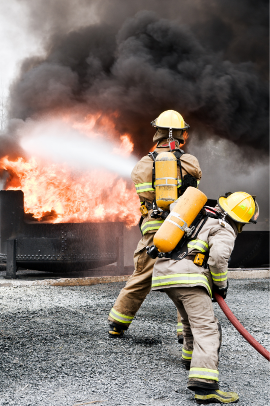
If your worklife is plan-do-plan-do, then you are firefighting.
We see many senior leaders and managers in this mode. Strategic, impactful employees who have got caught in the cycle of firefighting. Next, next, next. There are also lots of unintended consequences:
- A repeat-cycle which is stuck, with a never-ending set of fires to be put out. The fires can often be tedious, tasks that do not give energy back. You lose energy and motivation.
- No time for root-cause analysis of what really is creating all the problems in the first place. What firefighting leads to is disengagement and dissatisfaction. Blame and finger pointing might occur.
- A major consequence of this in the end is that the system gradually, and often unconsciously, slows down. Boredom, disengagement, them-us styles of thinking all can set in. And procrastination, the foremost consequence of stress, starts to dominate. The easy stuff is catered for, but the bigger change stuff, or problem solving, well that just sits in a pile. When there is an urgent need to really get on top of one of these issues, people cannot act fast anymore, and instead make a meal of it, chew it over for too long, don’t make decisions; caution is the dominant way of working all across the organisation now.
Change is nigh-on impossible.
In both situations above, you may lose confidence in your ability to problem solve, and perhaps even to manage or lead.
The nub of what’s going on underneath both of these issues is that there is no learning happening. More bluntly, there is no time given to reflection.
Learning does not happen unless you both firstly notice what is actually happening as a result of your actions, and secondly have the space and time to consider the consequences of this in your next steps.
You need the four steps of learning to make good changes: DO – WHAT HAPPENED – SO WHAT – WHAT NEXT?
I know that you will know this already, but just find it very hard to see the wood from the trees. My invitation is to notice more deeply the very unpalatable consequences of destroying your learning capability by not giving yourself enough time to think.
Slow down and give yourself a chance to do your best thinking.
If this article has resonated with you and you are interested in working with the Resilience Dynamic, please don’t hesitate to get in touch via [email protected].
If you would like to explore more about The Resilience Dynamic, do have a look at the following resources:

Author: Jenny Campbell Founder and CEO of the Resilience Dynamic
Follow Jenny on LinkedIn for more of her thoughts, resilience research, and ideas.
Gain exclusive access to Resilience Dynamic in-depth insights
Extend your knowledge, expand your thinking into Healthy, High Performance.
Register today and get your free login to:
- Gain exclusive access to in-depth resilience insights.
- Download and share the insights with your friends and colleagues.
- Receive resilience in-depth insights and tools straight to your inbox, every month.
If you are already receiving our resilience tools via email but it's the first time seeing this exclusive access, do register. You'll get the new exclusive insights, plus be able to download all articles. Simply complete this registration form once to get your login details.
Read our privacy policyRegister
Related Articles

Mind The Gap!
Leaders are often caught in ‘gap management’. They fill the gap between what makes for a good job and what they think their team can deliver. This might mean filling in for less skilled team members, or getting involved in areas where they continue to be expert. It often means they haven’t let go.
Leaders need instead to consider what good and great looks like, how to enable a closing of the ‘gap’ via team enablement, and how to transform the value of the whole effort to achieve greater success.

Rest and Recovery Are Not Luxury – They’re Performance Multipliers
You may be ignoring a truth: performance is not driven by perpetual effort but by the capacity to restore. You don’t just need more focus; you need strategic restoration through rest and recovery.